
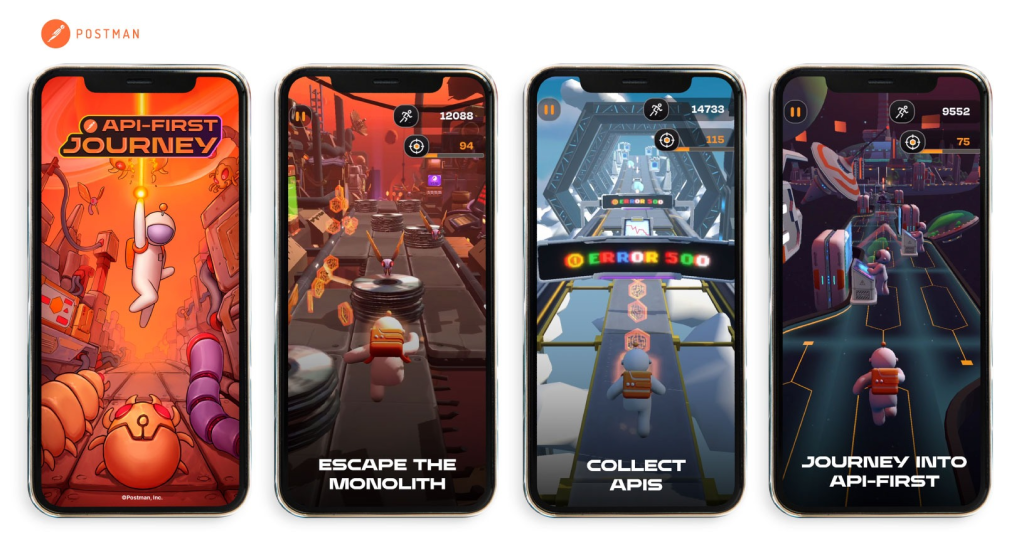
I write this while on maternity leave reflecting on the amazing year 2023 was, professionally and personally. I wanted to share some insight into one of my favorite projects last year. I directed and launched a mobile game at Postman. Our game, ‘API-First journey’ was a quest to visualize elements of the API-First world, dig into developer problems and narratives metaphorically, and develop a design language that can stretch into the Postman brand all while being fun. Here’s what went into building the game.
Postman: API-First Journey
Immersive Storytelling
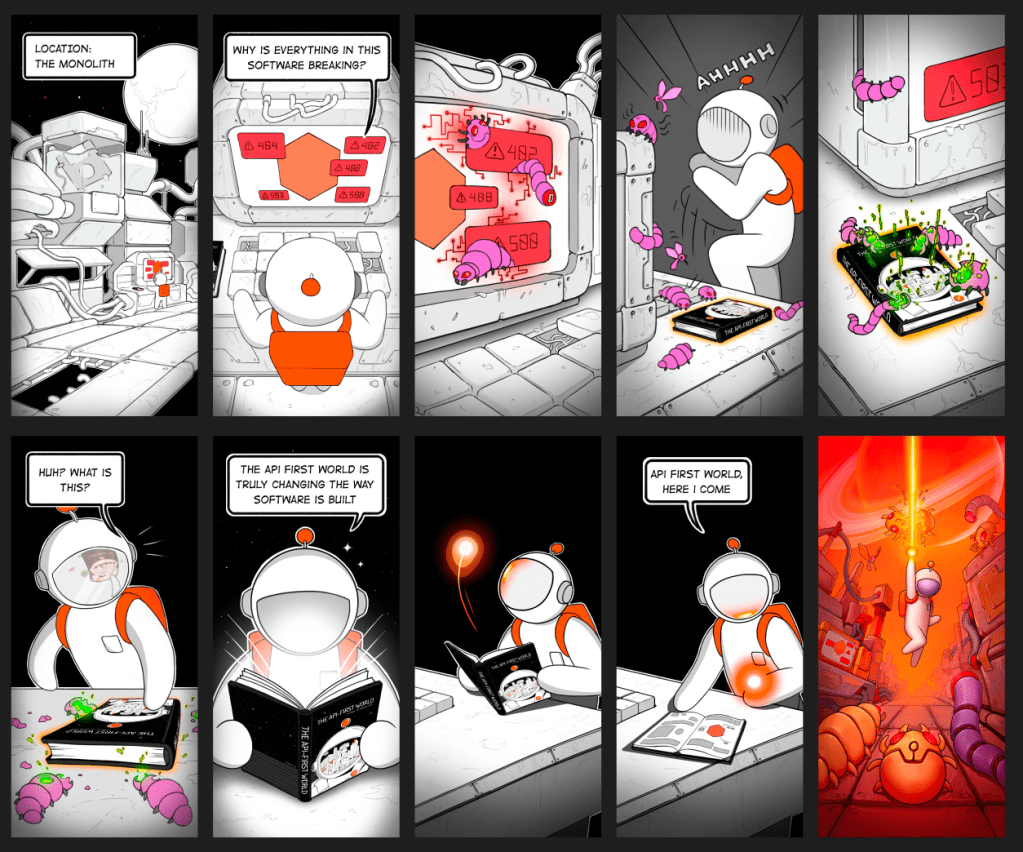
Stories offer a powerful way to visualize worlds, and at Postman we are always looking for new ways to share our story. In 2021, I illustrated and launched our graphic novel, The API-First World, detailing the company vision to help create 100 million developers.
We wanted to push the vision further and create a more immersive experience. Being ardent fans of video games, we naturally looked to the gaming industry for inspiration to create our very own game that takes players through a journey to API-First.
The art of game design

I had never designed a game before but I absolutely love a challenge even though it keeps me up at night. Before I began working on the project, Postman CEO Abhinav suggested I read ‘The Art of Game Design by Jesse Schell’. This book was exactly what I needed, it covered key concepts in game design and makes it easier to approach the craft. All games are inherently built on the same principles of psychology that Jesse unpacks in this book. He says, good game design happens when you view your game from many different lenses. Each lens he talks about breaks game development down into a bite sized approach that you can then apply to your game.
This podcast is a great listen that goes over the same topic.https://www.youtube.com/watch app=desktop&v=-RuVVHV8xqg
Lenses from the book that I leaned most on for our game
The Lens of the Elemental Tetrad
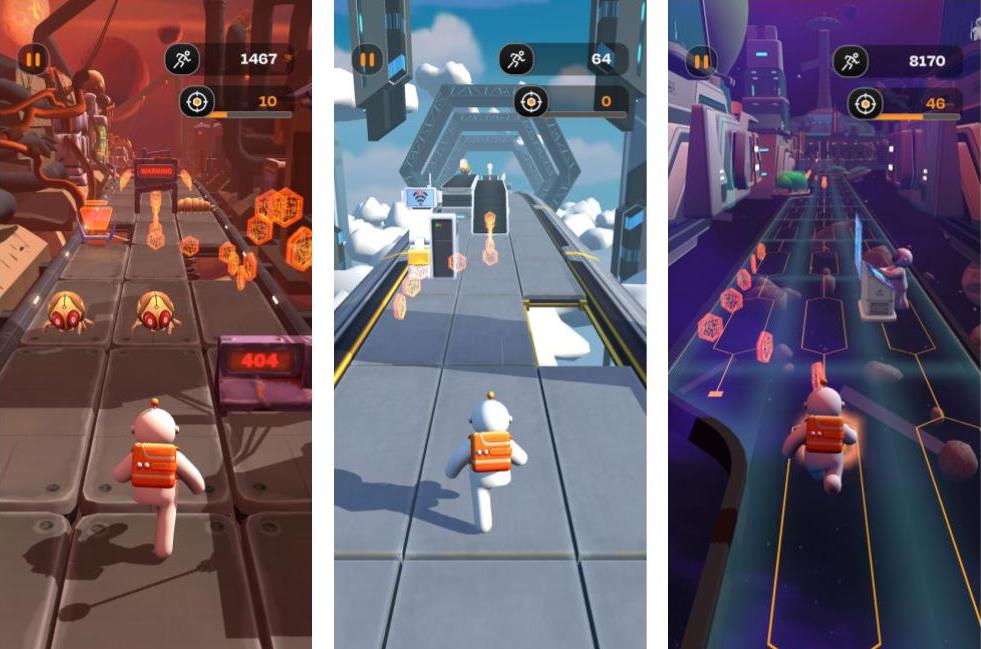
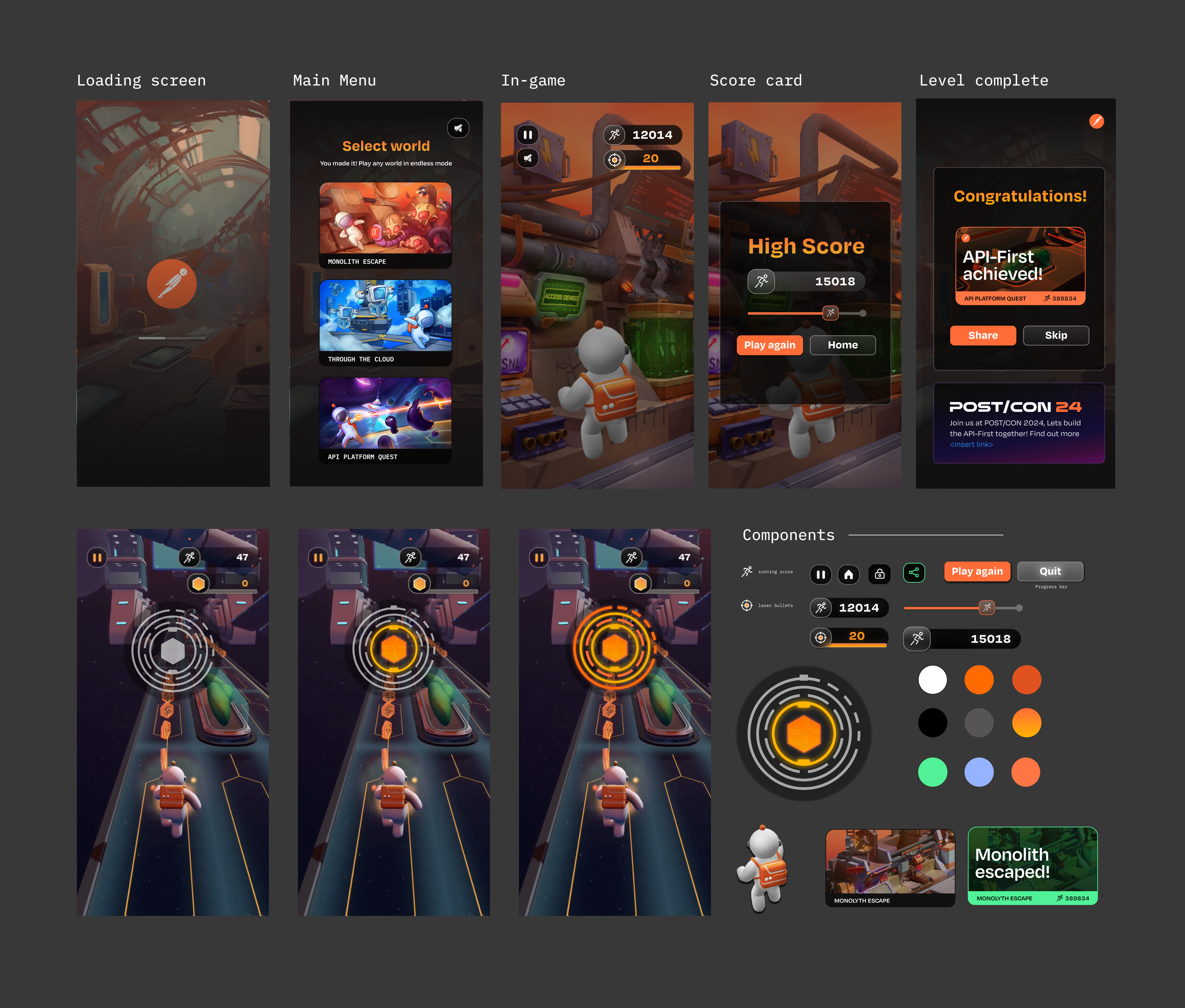
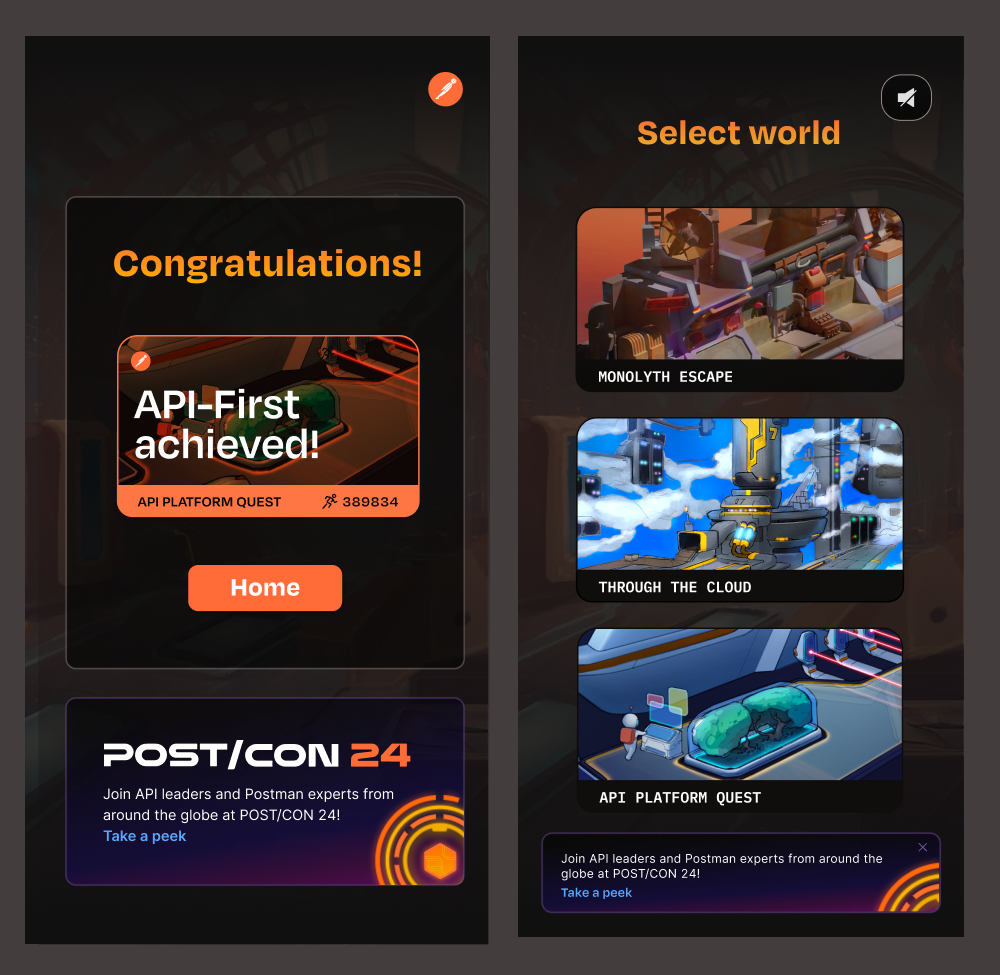
To use this lens, take every element of your game, look at it individually, and then together to create a story. This led to three worlds in our game, The Monolith, the Cloud, and API-First and the overall journey that a player takes to get there.
The Lens of Unification
Consider the why behind your game and make sure every decision you take resonates with the theme and intention you have set for your story. I did this in the details of the game.
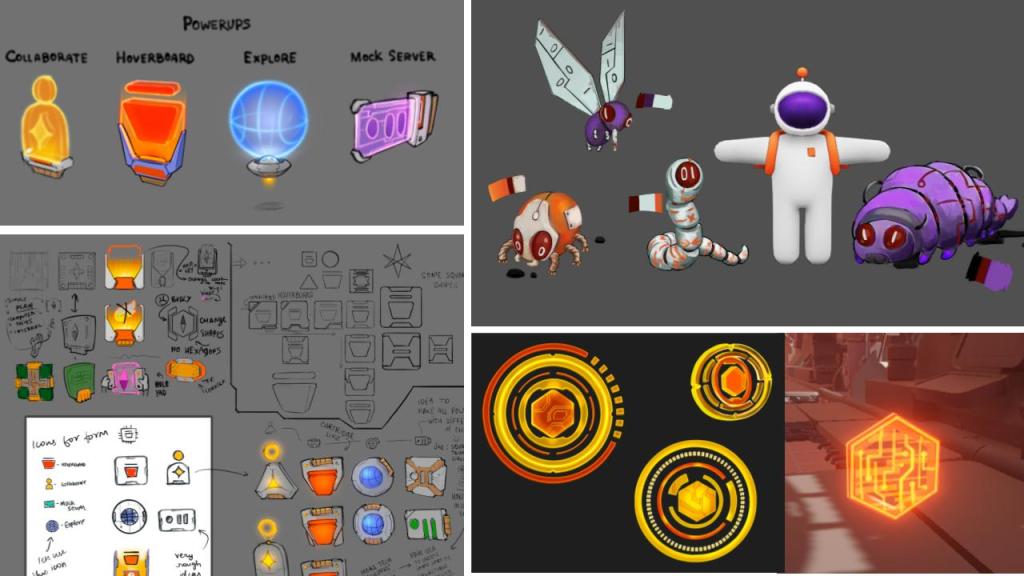
- Bugs that die in binary digits
- Power-up icons from the Postman product
- Hexagons to represent APIs as ammo
- Shield that represents Postmans API lifecycle
All these elements and many other easter eggs make this world recognizable for Postman users and our brand story.
The Lens of Fun
Regardless of who played the game, the goal was to make sure they had fun, this meant knowing how to simplify technical concepts within our story. Folks messaged me saying their kids enjoyed this game after we launched and I take that as a win, who knows fun better than the kids.
World building
“Game mechanics don’t have to be math-based (e.g. points or score) for players to feel the rush. Sometimes, game mechanics are more focused on conveying something abstract, like an emotion. Mechanics can do all sorts of things — anything a designer can dream up, really.”
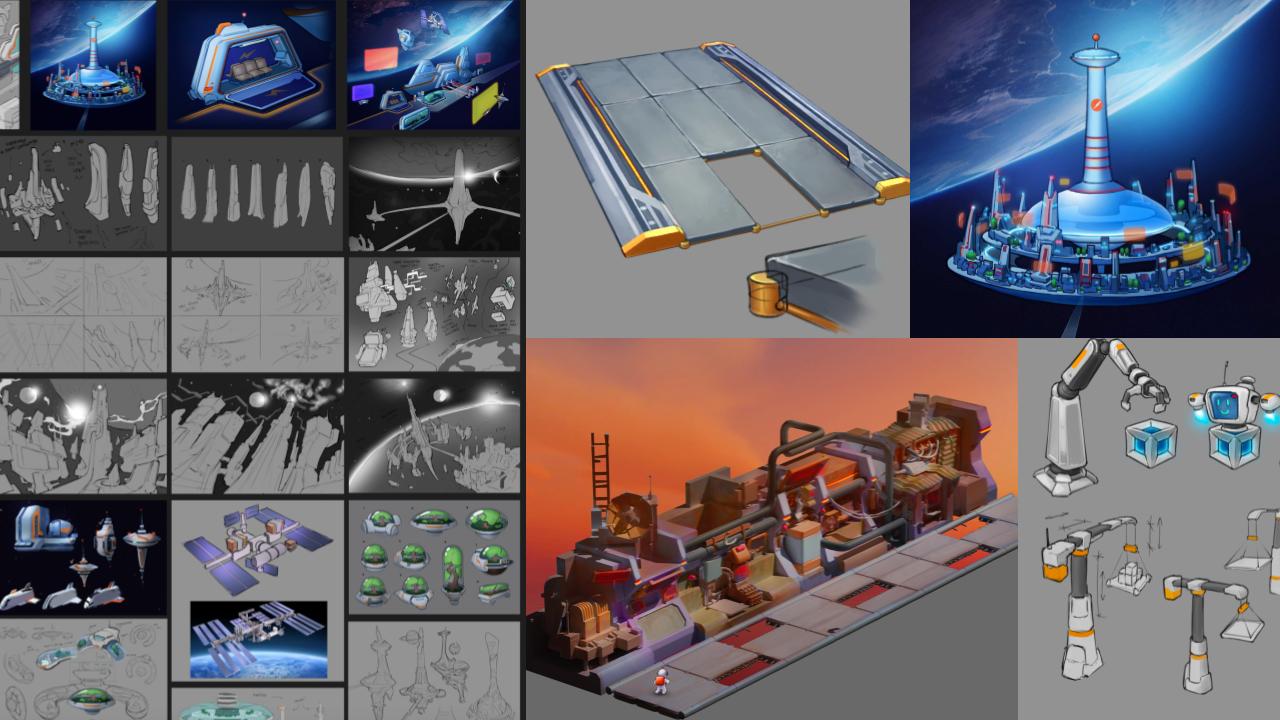
The game is set in the world of mismanaged API processes. Players play as our endearing mascot, struggling to build software in the monolith. Using Postman tools, players navigate this broken world, travel through the Cloud, and finally reach the API-First World. Along the way, collecting APIs that make them powerful on their journey to API-First.
Creating a whole world in a game was a great way to set up a visual library that users can relate to and recognize as Postman.
Consistency was key, I made sure to stay in line with brand elements used across the rest of our brand and our assets, this way any touchpoint for our brand always stays recognizable.
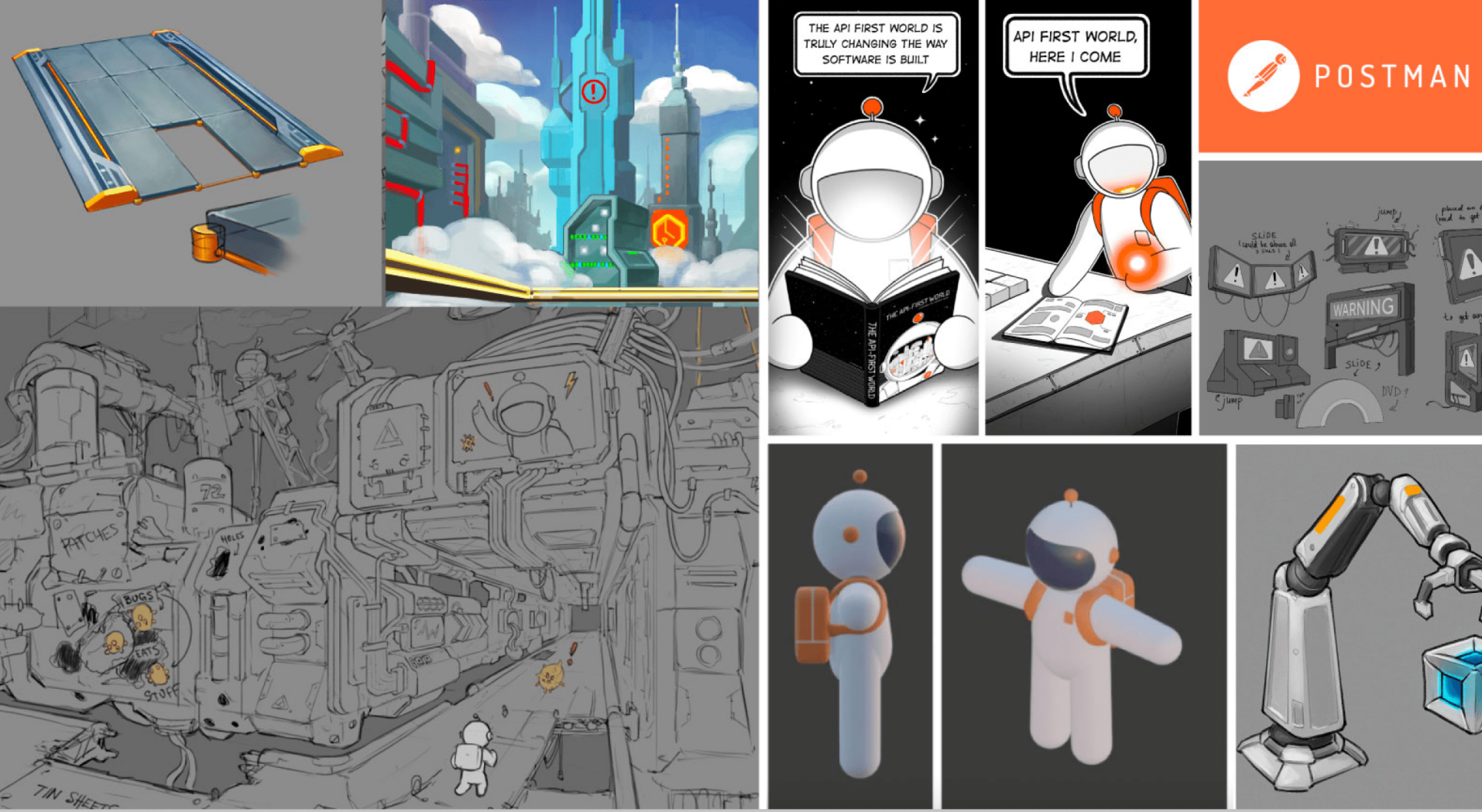
Here is a look at some of the concepts and the art that went into building this world.
Why we built a game
- To highlight API-First our company vision in an interesting way.
- We connect to a story’s characters and their world when we’re able to control them through our actions in a game.
- We wanted to explore new mediums and had a strong mascot and product to work with.
- The Postman community is quite nerdy and people in general appreciate being able to have fun when its relatable and filled with easter eggs.
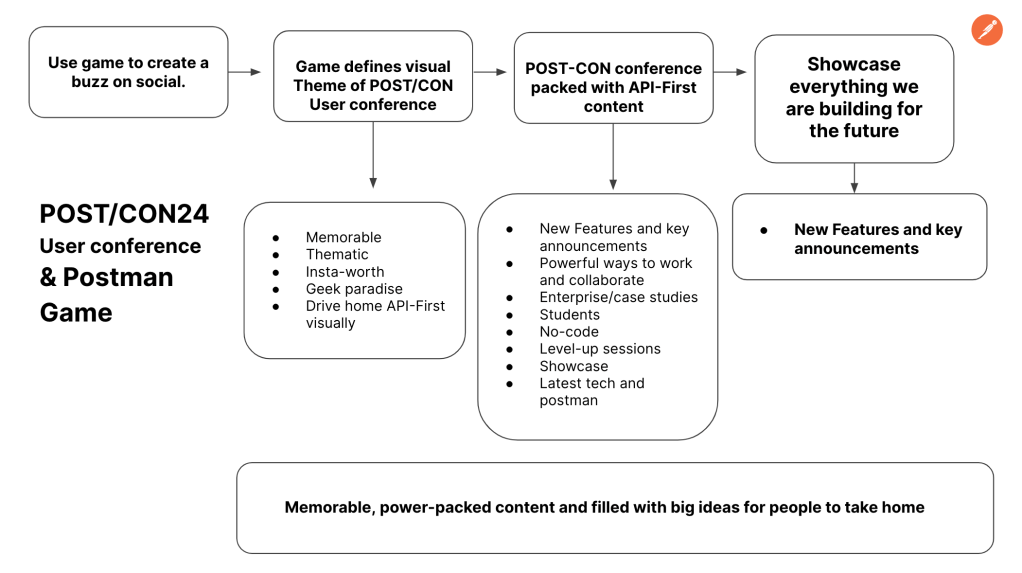
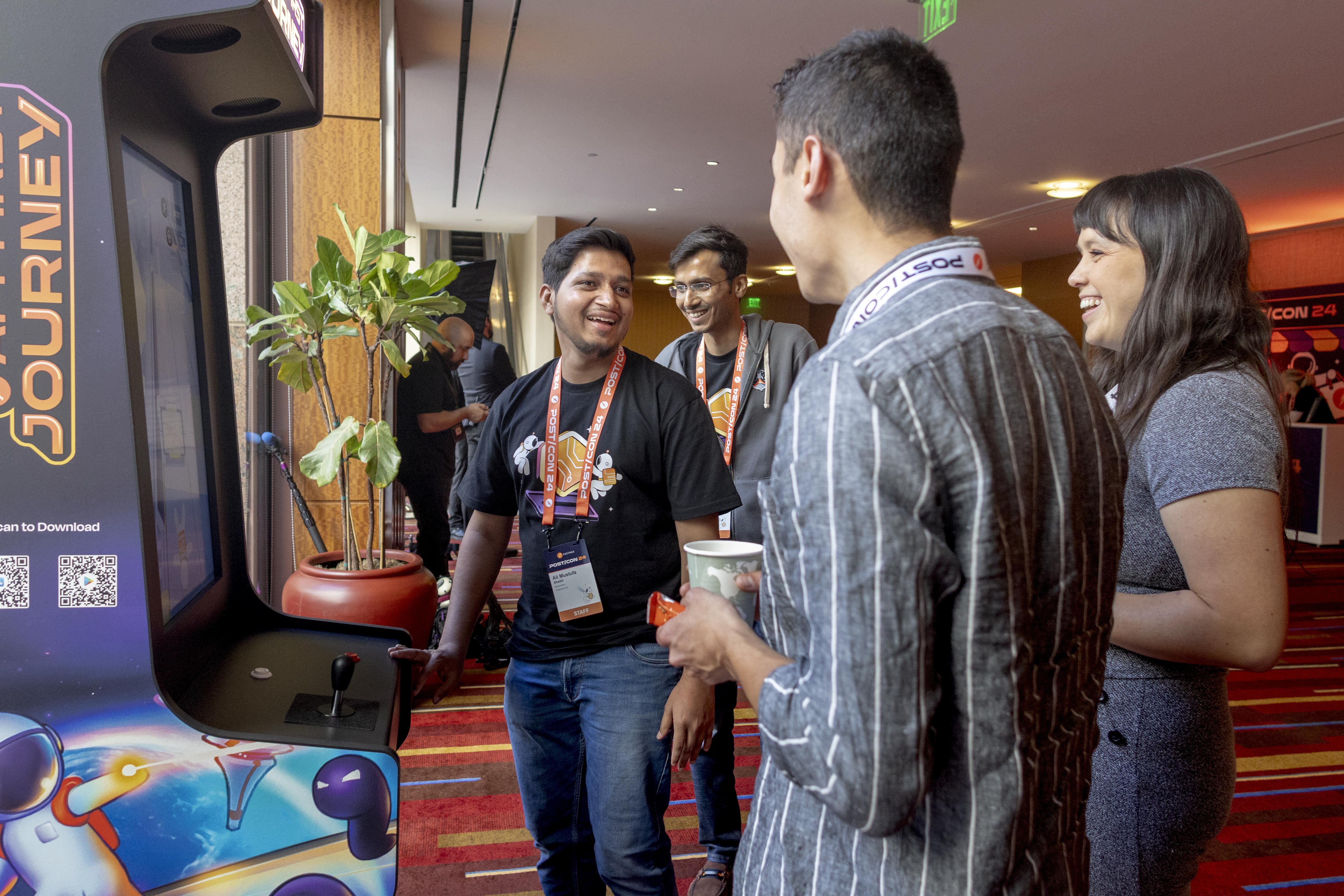
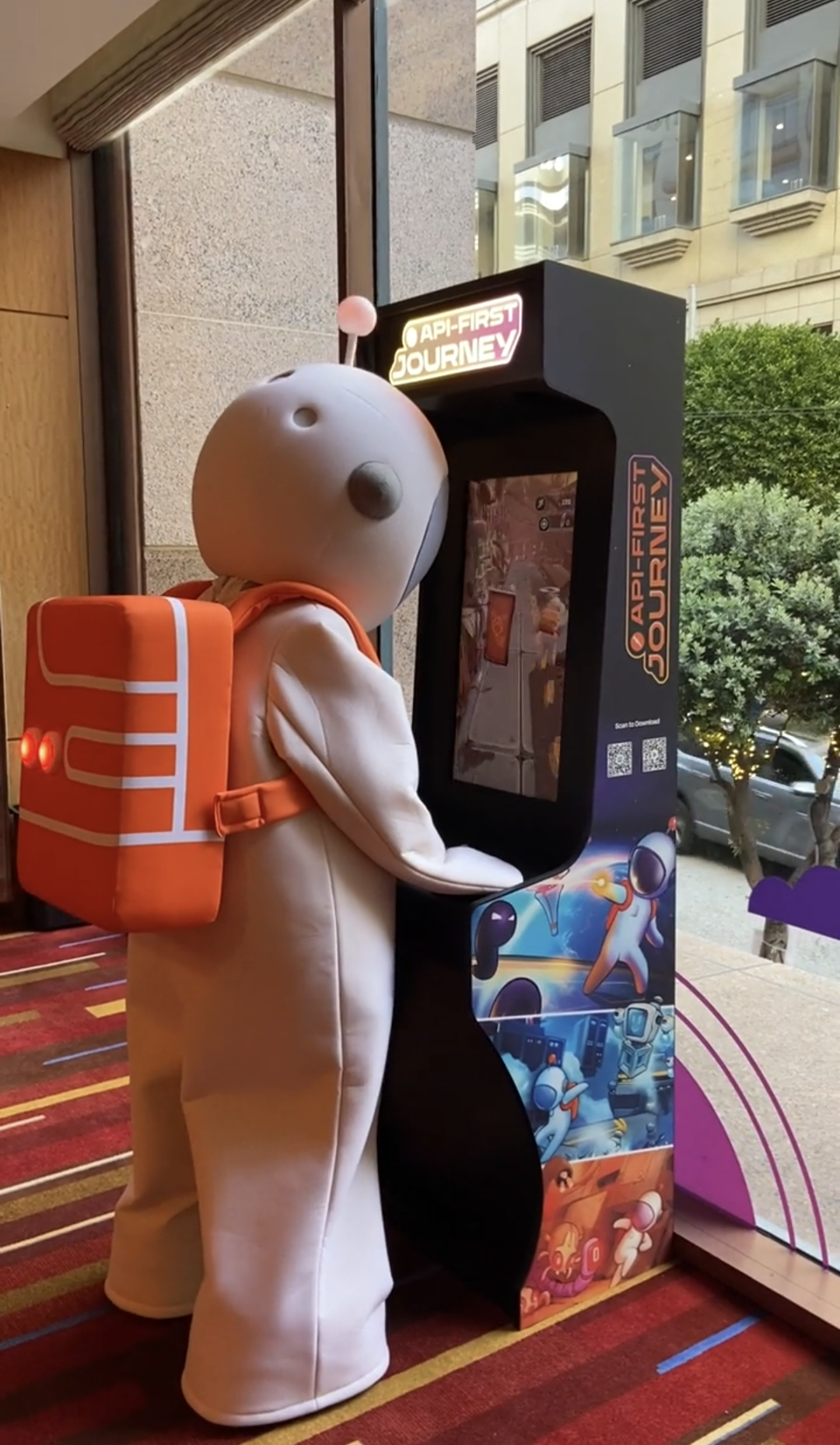
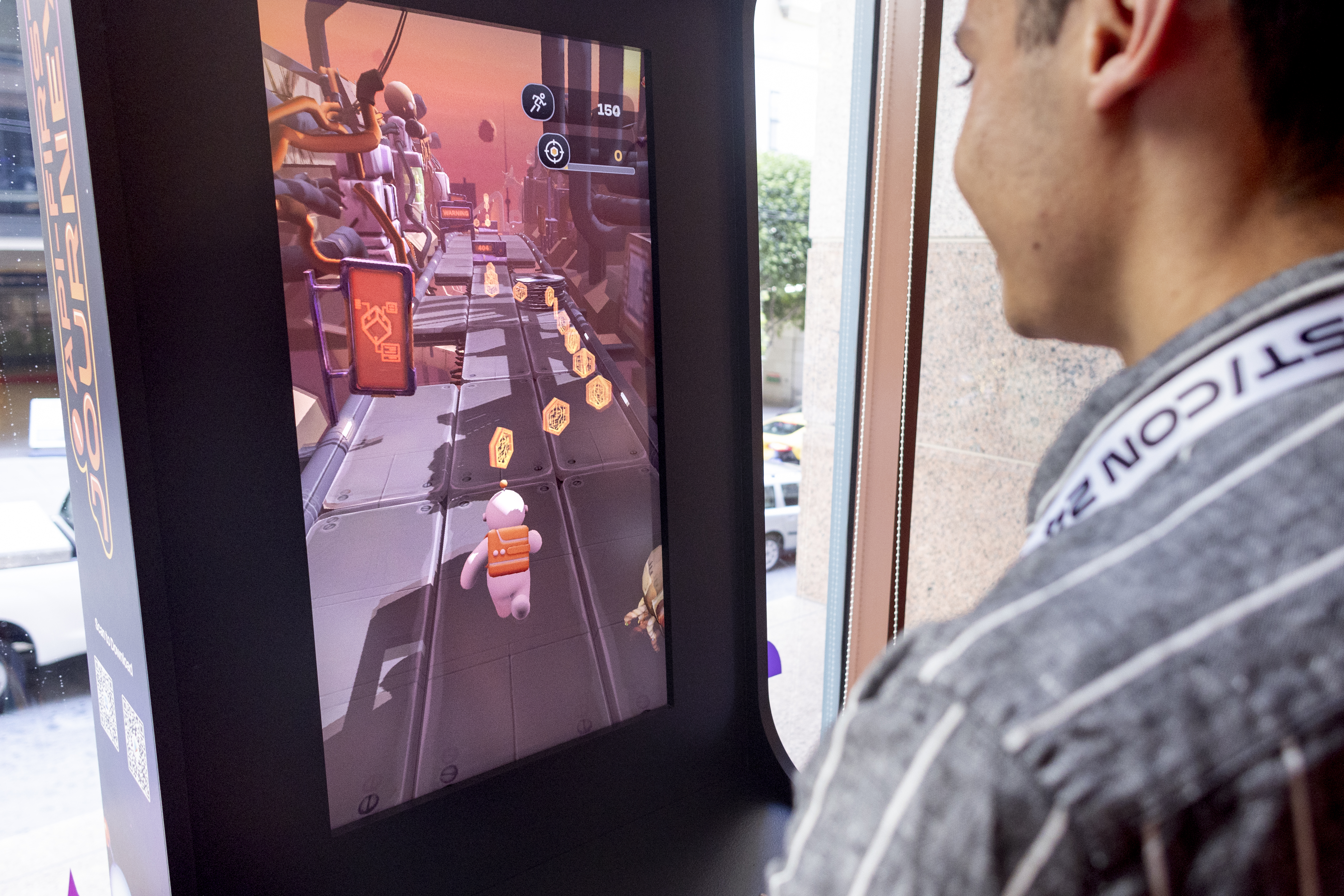
- Promote the API-First User conference and build a retro style arcade for the events.
Game launch and User Conference
We launched the game in November on Play Store and App store and had over 3k downloads by the end of the week. We received a lot of love from the community and beyond.
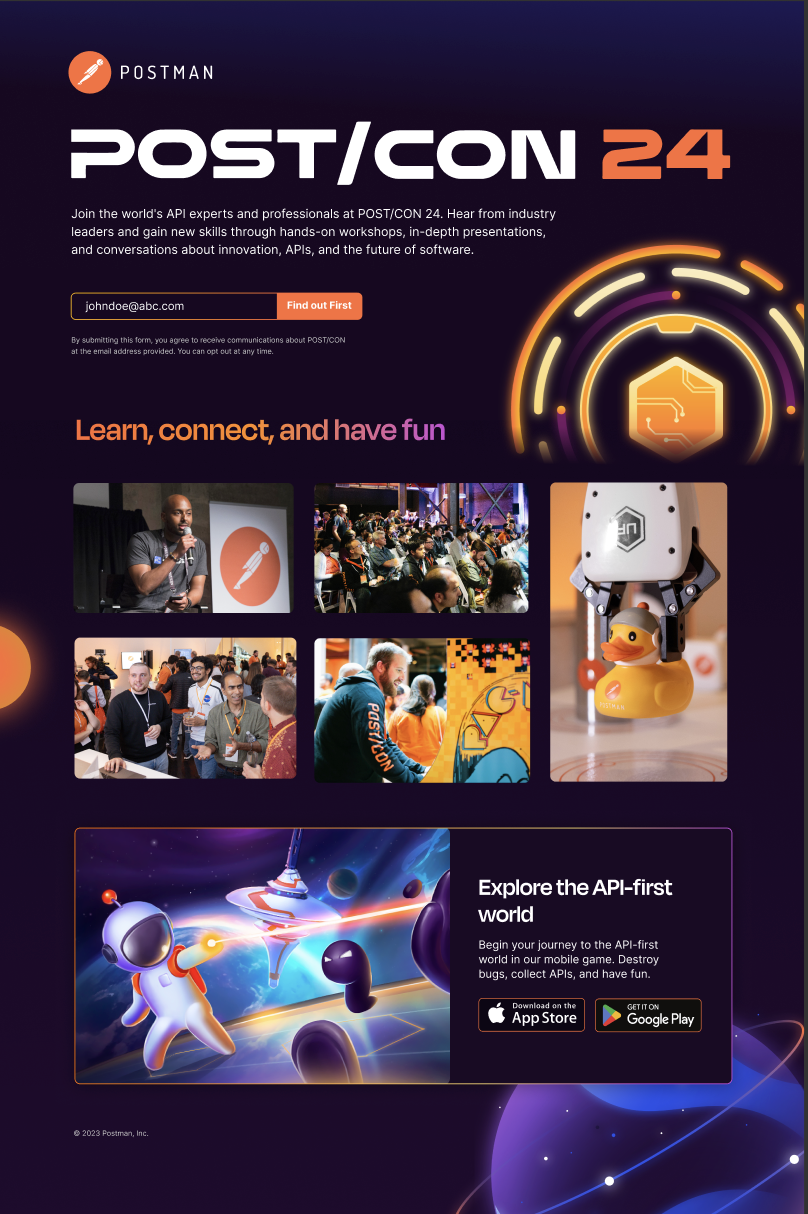
The game immersed players in the Postman universe and teased POST/CON 24, Postmans biggest API User Conference held on April 2024. The conference was set to the visual theme of the game. Where the game ends is where the conference began. Platforms for marketing the game included social media, product hunt, emailers, and blogs.



Where to find the game
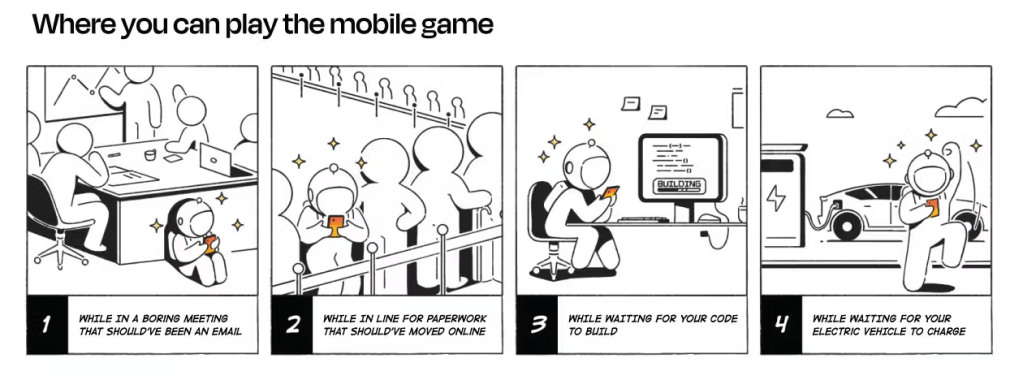
Postman: API-First Journey is available for mobile devices. Download it today on your phone or tablet from the IOS App Store or Play Store.
TEAM
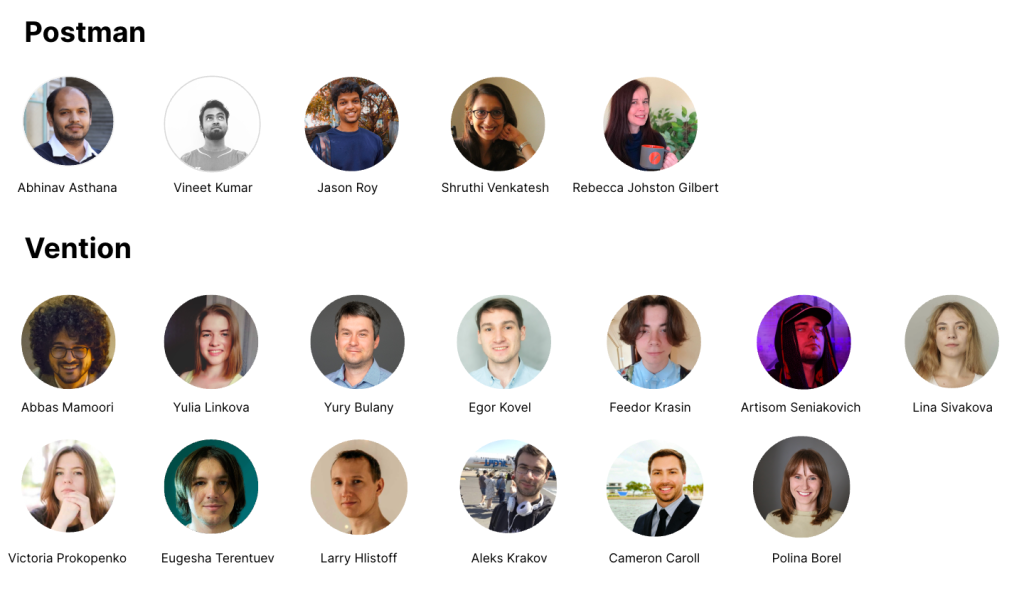
This game took a village to build and I’m grateful for getting to work with this talented team.
Special thanks to https://ventionteams.com for helping bring this world and vision to life.
Thank you!
 shruthivee.com